



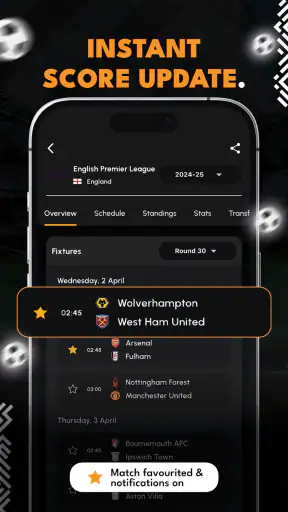

I often check scores in the middle of ordinary things: waiting for a train, cooking dinner, or trying to follow a match while working. That is the situation where Live Soccer Scores - IGScore makes the most sense. It is a free sports app from HIPPO TECHNOLOGY SDN. BHD. focused on putting live football information into a quick, readable view instead of making me search across several pages.
After using it as a match companion rather than as a full football news service, I found its main appeal easy to understand. I can open it when I want a fast answer, see what is happening, and move on. The app is not trying to replace every specialist service around football. Its value is the short path between wondering about a match and getting a useful update.
That sounds simple, but speed and clarity matter when a game is moving. A score app that makes me dig through menus has already failed its most important job. IGScore generally feels designed for those brief checks, while still offering enough supporting information to make the score more meaningful.
From a quick question to a useful match update
The starting point: deciding what I need to know
My usual starting condition is very specific: I want to know whether a match has started, what the current score is, or how a game ended. Sometimes I also want context around that result, such as available statistics or updates connected with the event. IGScore is built around that kind of immediate need, so I do not have to begin with a long article or a video stream.
The app belongs firmly in the sports category, but its practical focus is football scores. That distinction is useful. Someone looking for a broad sports dashboard may appreciate the wider live-sports idea suggested by the service, while a football follower will probably understand the app more quickly because the match-score workflow is familiar.
Before relying on any score app, I ask myself whether I need live viewing or simply live information. IGScore answers the second need. It is a companion for following events, not a substitute for watching the match itself. If I want commentary, analysis, replays, or the atmosphere of a broadcast, I need another service. If I only need to stay oriented, the lighter approach is more convenient.
Step one: opening the app and finding the relevant event
The first useful habit is to treat the opening screen as a starting board rather than as a destination. I look for the match I care about, then use the available match information to decide whether it is the correct event. This is especially important when clubs have similar names or when several fixtures are taking place close together.
I would not recommend tapping the first familiar-looking team name without checking the surrounding details. A score app is only helpful when the event selection is right. My practical workflow is to confirm the teams, competition context when shown, and match status before I start interpreting the numbers. That small pause prevents the most annoying kind of mistake: following the wrong fixture with complete confidence.
The app’s free price makes it easy to keep installed for occasional use. I do not need to justify a subscription simply to check a result during the day. That is a strong advantage for casual supporters, people who follow several clubs irregularly, and anyone who wants a straightforward score tool without turning football tracking into a major commitment.
Step two: reading the live state instead of guessing
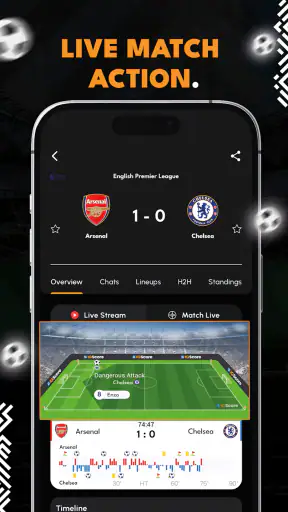
Once I reach a match, I first read the score and status together. A score without its state can be misleading: a match may be upcoming, in progress, finished, or otherwise waiting for an update. I use the status as the explanation for the number, not as decoration underneath it.
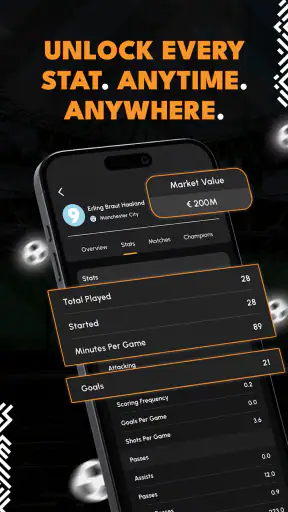
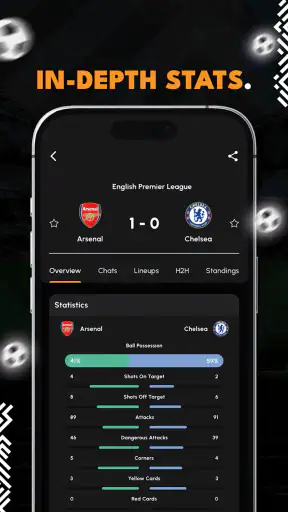
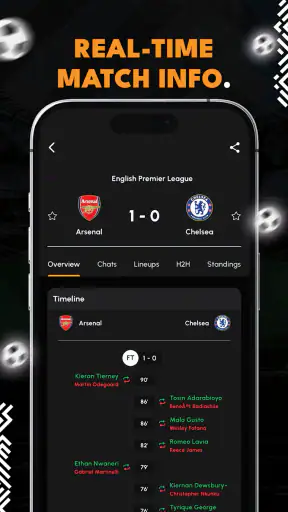
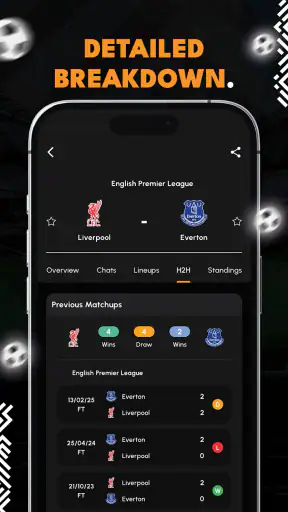
This is where the app’s promise of live scores, statistics, and updates becomes practical. The score gives me the immediate result, while the supporting information helps answer the next question: is this a settled outcome or a changing situation? For a match in progress, I treat every figure as a snapshot. For a completed match, I can use the same screen as a quick record of what happened.
A useful, less obvious workflow is to separate “checking” from “following.” If I only need an answer, I open the match, read the current state, and close the app. If I am following a game over a longer period, I return to the same event rather than repeatedly searching from the beginning. That reduces friction and helps me compare the match’s changing state more consistently.
Step three: using statistics as context, not as a verdict
Statistics can be helpful, but I try not to treat them as a complete explanation of a match. A team may lead in one category and still be behind on the scoreboard. A numerical advantage may reflect possession or attempts without telling me whether the chances were dangerous. IGScore is most useful here as a compact reference point, not as an automatic analyst.
My preferred approach is to read the score first, then use the available statistics to ask a narrower question. Is the result broadly supported by the match pattern? Is one side creating pressure? Does the information explain why a scoreline feels surprising? This keeps the app useful without asking it to provide the deeper tactical interpretation that belongs in specialist reporting.
That distinction matters for new football followers. A list of numbers can look authoritative, but numbers need timing and context. I would use IGScore to stay informed during a busy day, then turn to a dedicated news or analysis source when I want the reasons behind the result.
The handoff: moving from the app to real life
The most important handoff is from the app to whatever I was doing before I opened it. I might be in a group chat, at work, or away from a television. The app succeeds when I can collect the needed information quickly and return to that activity without losing track of the match.
There is also a handoff between people. If a friend asks, “What is happening in the game?”, I can check the live state and respond with more than a guess. For a finished match, the same process helps me confirm the result before joining a conversation. In these moments, the app works as a shared reference rather than as a place where I spend a long time browsing.
Another practical handoff is between score information and a later decision. I might decide whether to watch a replay, read a report, or simply wait for the final result. IGScore can provide the trigger for that choice, but it does not need to own the entire journey. I like that limited role because it keeps the app focused.
A realistic everyday scenario
Imagine I am commuting while a club I follow is playing. I cannot watch the match, and I do not want to scroll through social posts that may mix rumors with facts. I open IGScore, locate the fixture, check whether it is live, and read the score with the available match context. If the game is close, I may check again later; if it has finished, I have the answer I needed.
The useful part is not any single screen. It is the sequence: a question, a quick lookup, a small amount of context, and a return to the day. That workflow is less demanding than opening a streaming service and less noisy than searching the general web. It also avoids the temptation to consume a full article when all I wanted was a current score.
For someone who follows several matches at once, the same scenario becomes more valuable. Instead of trying to remember which games have started, I can use the app as a live overview and then inspect only the events that matter to me. The trade-off is that a broad list can become busy, so I still need to be selective about which match deserves attention.
What happens after the final whistle
The result stage is where a score app proves whether it is useful beyond the excitement of a live match. I use the final score as a quick record, then look at the surrounding information if I want to understand the outcome better. This is convenient when I missed the game and need a compact catch-up before reading a longer report.
For casual use, that may be enough. I can confirm who won, see the completed state, and decide whether the match deserves more time. For a more committed supporter, the app is better viewed as the first layer of a post-match routine. It gives me the basic result and a statistical starting point, while dedicated football sites remain stronger for interviews, tactical breakdowns, transfer news, and detailed narratives.
This division of labor is one of the clearest ways to use IGScore well. I would not judge it harshly for lacking the depth of a full editorial platform, because that depth is not the reason I open a live-score app. I judge it on whether it gets me to the match state efficiently and leaves me with enough context to choose my next step.
Where the flow breaks
No live-score workflow is completely frictionless. The first possible break is event discovery. When many matches are active, finding one particular fixture can take more attention than expected. I reduce that problem by searching with the teams in mind and checking the event details rather than relying only on a familiar badge or name.
The second break is the natural delay between a real-world event and what appears on a screen. I never treat a displayed score as a perfect substitute for being in the stadium or watching a broadcast. If a goal has just happened, I allow for the possibility that the information may need a moment to catch up. This is a general reality of live updates, but it is important when emotions are high and every second feels significant.
The third break is interpretation. Statistics can make the app feel more complete, but they do not automatically explain momentum, injuries, tactics, or controversial decisions. When I need those details, I hand the task to a news source or live commentary service. IGScore remains useful, but only within the boundary of what a compact score-and-stats tool can reasonably do.
There is also a personal attention trade-off. A service designed for instant updates can encourage repeated checking. I find it healthier to decide what I am checking before opening it: the current score, the final result, or a particular match statistic. That simple rule keeps the app from turning a short information task into constant refresh behavior.
How it compares with the usual alternatives
The most obvious alternative is a general web search. Search is flexible and can lead to news, videos, and commentary, but it often produces a less focused experience. For a single score, a dedicated sports app is usually the cleaner route because the information is organized around matches rather than around whatever pages happen to rank well.
Another alternative is a club-specific app. That can be better when I care almost exclusively about one team and want club news, squad information, or official announcements. IGScore is more suitable when my attention moves between different competitions or when I want a neutral place to check several fixtures without switching between team services.
Live television and streaming platforms are better when the match itself is the priority. They provide the visual action and emotional context that a score screen cannot reproduce. IGScore wins only when watching is impractical, unnecessary, or too time-consuming for the moment.
Finally, social media can be faster for breaking reactions, but it is also noisier and more interpretive. I prefer IGScore for the basic event state, then use social channels only when I want fan discussion. That order helps me separate what happened from what people think about what happened.
Who will get the most from it
I think the app is a good fit for casual football followers, busy supporters, and people who follow more than one match without wanting a heavy sports-news experience. It is also useful for someone who wants to check results during short gaps in the day. The free model lowers the barrier to trying it, and the Teen content rating makes it a reasonable option for older younger users within a family’s own comfort and supervision choices.
Its scale also suggests that it has reached a broad audience: the app has passed five million installs and holds a 4.2 average from around 6.3 thousand ratings. I do not treat popularity as proof that every person will enjoy it, but it does make the app feel like an established option rather than an obscure experiment.
I would skip it if my main requirement is watching matches, receiving deep tactical analysis, or managing a detailed personal football database. A club’s official service may be better for exclusive team information, while a larger sports platform may offer more extensive coverage across events and media. IGScore is strongest when the desired outcome is immediate orientation.
Compatibility, maturity, and everyday practicality
The app runs on Android 7.0 and later, which covers a wide range of devices still in everyday use. That makes it easier to consider for someone with an older phone who does not want to upgrade hardware just to follow scores. On the other hand, compatibility alone does not guarantee the same feel on every device, so I would still keep expectations practical on older hardware.
Its current version is 2.4.5, and the app was released on August 31, 2024. I mention those details because they help place the product in context: it is a relatively recent sports app with an active version line, rather than a long-established service whose design history is familiar to everyone.
The developer, HIPPO TECHNOLOGY SDN. BHD., has chosen a focused identity around live sports information. That focus is helpful when I want a quick match check, although users who prefer one all-in-one sports ecosystem may find a broader platform more convenient. The right choice depends on whether simplicity or coverage matters more in daily use.
My practical routine for getting better results
I get the most from IGScore when I use a three-part routine. First, I identify the exact match instead of opening the first result that looks familiar. Second, I read the match status alongside the score. Third, I use statistics to add context, not to replace commentary or judgment.
For a busy match day, I would check the overview first, choose only the fixtures I genuinely care about, and return to those rather than repeatedly scanning everything. After a match ends, I would use the final score as a decision point: stop there if I only needed confirmation, or move to a deeper source if I want an explanation.
That workflow also makes the app easier to recommend to a friend. I would say: use it for the answer you need now, and do not expect it to be your entire football world. Once I approached it that way, its strengths became clearer and its limitations felt less frustrating.
My final take after using the full workflow
Live Soccer Scores - IGScore is a sensible free sports app for people who want a fast route from “What is happening?” to a current football update. I like its focused purpose, the combination of scores with supporting match information, and the way it fits into small gaps in a normal day. It is especially handy when watching is impossible but staying informed still matters.
It is not the right tool for every football need. I would choose a streaming service for live action, a news platform for detailed explanation, and a club app for team-specific coverage. The app’s best result comes from accepting that it is a compact information layer, not a complete replacement for those alternatives.
My recommendation is straightforward: install it if you regularly need quick live scores and want a free, low-commitment way to follow matches across your day. Skip it if your priority is video, long-form analysis, or highly specialized club content. Used within its proper role, it turns a scattered score-checking habit into a much cleaner workflow.


